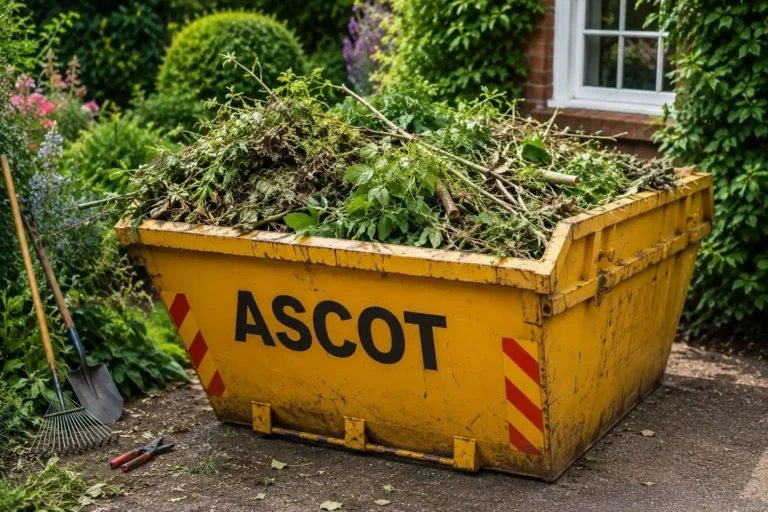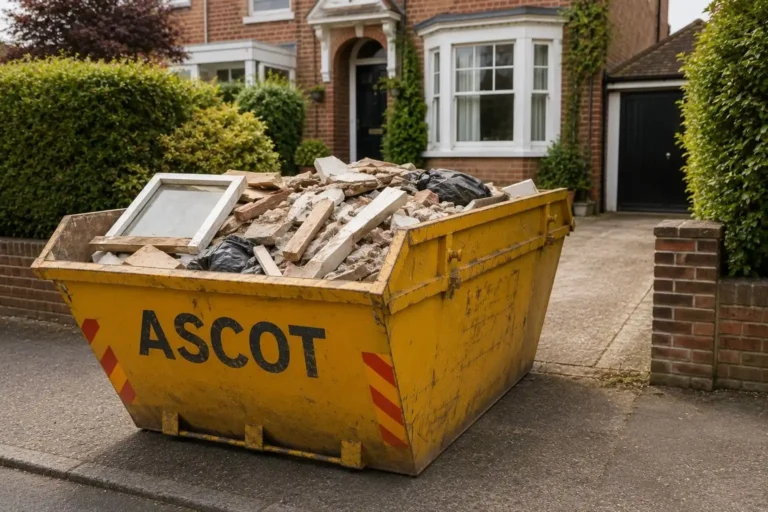
It is easy to assume that the largest standard skip will be enough for a big project. Get the choice wrong, however, and you could face repeated collections, rising costs and waste piling up on site. According to the Department for Environment, Food & Rural Affairs (Defra), England generated around 32.6 million tonnes of commercial and industrial waste in, showing just how much waste businesses may need to manage.
The right container can make a significant difference to how efficiently your waste is removed. So, if your project is generating waste faster than a standard skip can handle, could it be time to consider roll-on roll-off skip hire?
What is a Roll-On Roll-Off (RoRo) Skip?
A roll on skip is a large, open-topped or part-enclosed container that gets loaded onto a specialist hook-loader lorry using heavy-duty wheels and a hydraulic winch, rather than being lifted by chain like a standard skip. This rolling loading method gives the container its name and allows it to handle far greater volumes of waste in a single collection.
Roll on roll off skip dimensions vary by size, but the containers typically run from around 15 yards up to 40 yards in length, with reinforced steel construction designed to take heavy, dense material such as rubble, soil, and construction debris alongside bulkier general waste. Many roro skip designs include rear doors, so material can be loaded from the end as well as over the top, which speeds up large clearance and demolition jobs considerably.
Compared with the 4-yard, 8-yard, 12-yard, 14-yard, and 16-yard skips a typical household will ever need, a roll on skip operates on an entirely different scale. It’s built for sites generating waste daily or weekly, not for a single weekend clear-out.
When Do You Need a Roll-On-Roll-Off Skip?
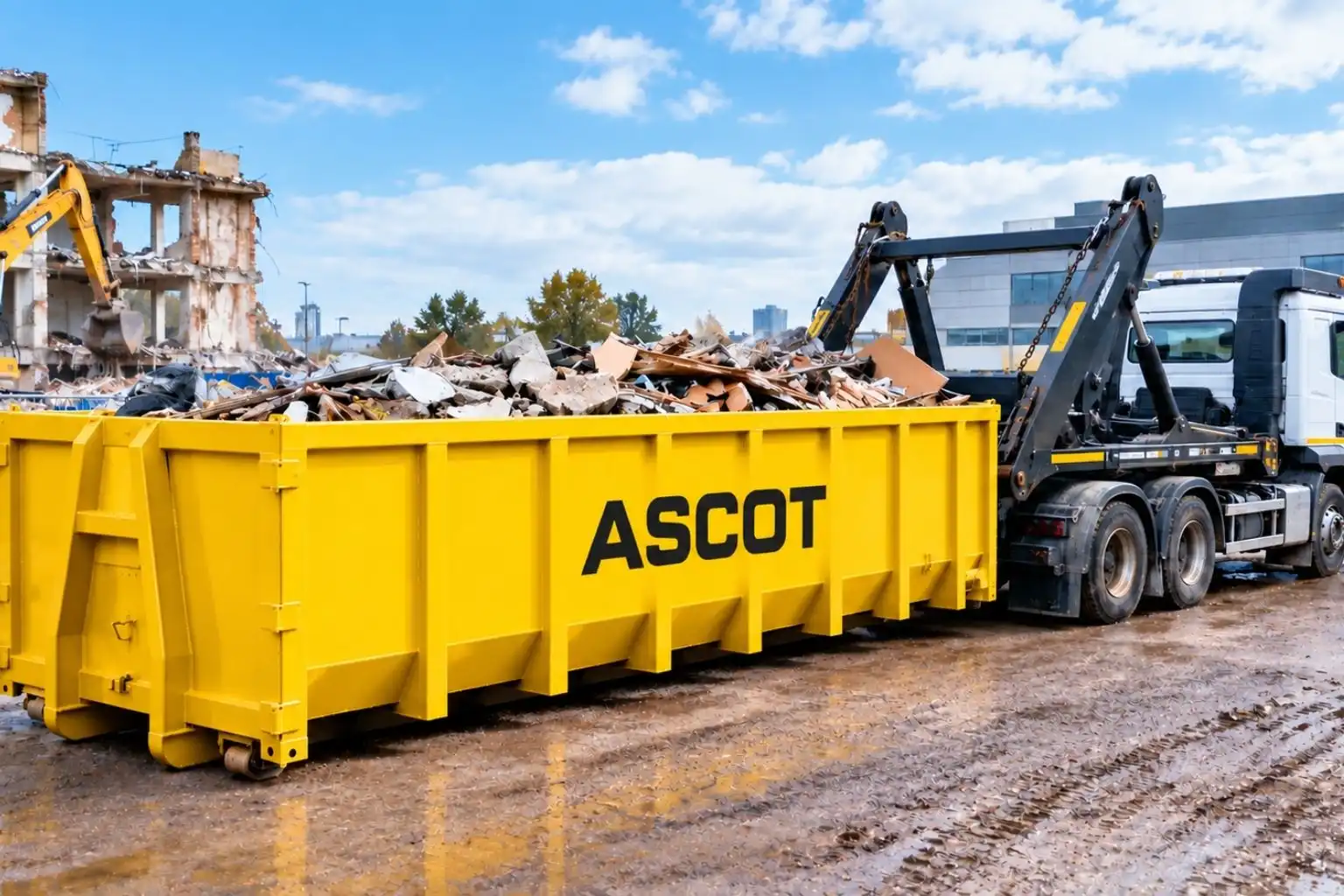
A handful of recurring situations come up again and again as the point at which a project should move from a standard skip toward roll on skip hire, and each one below is a case where roro skip hire consistently outperforms repeated standard skip bookings.
Large Construction and Demolition Projects
Ongoing volumes of bricks, concrete, hardcore, and mixed construction waste build up faster than a standard skip can be emptied on an active site. A roro skip keeps material moving off site without repeated bookings, which matters in the construction industry once demolition work is generating waste daily rather than weekly.
On suitable sites, enclosed or specialist RoRo containers may also be used for disposing of dry hazardous waste such as asbestos, subject to the correct handling rules. Once a job has outgrown even a 16 Yard Skip, the higher weight allowance of 40 yard skip hire becomes the deciding factor for demolition contractors.
Commercial and Industrial Clearances
Warehouse clear-outs, office refurbishments, and full strip-outs generate commercial or industrial waste at a pace that quickly outstrips a domestic-sized container in a business setting, particularly once flooring, partitioning, and fixtures are involved alongside general rubbish. A 20 cubic yard RoRo is often used for lighter waste from refurbishments and interior work.
A 30 cubic yard option suits high volume, light waste from larger strip-outs, including shop fittings and wood. A smaller commercial job might start out on a 14 Yard Skip, but a roro skip left on site through the project absorbs steady daily output without a new booking every few days.
Large House Clearances
A full clearance of a house, including loft, garage, and shed contents, can easily run to 15 to 20 yd³. That volume would otherwise take three separate skip hires, with the waiting and rebooking each one involves, and the risk of a part-filled skip sitting on the drive.
A roro skip covers the lot in one go, and the walk-in rear doors make it easier to load bulky furniture and white goods than lifting them over a standard skip wall. Smaller clear-outs of a single room or garden suit a 4 Yard or 8 Yard Skip. For just a few bags, our Man and Van service can be quicker than booking a skip at all.
Extended Trade Jobs
Builders on larger scale construction projects or extended trade jobs often produce large amounts of waste over time and can spend more across three or four skip swaps than they would on a single roll on skip hired for the whole duration of the job. In many cases, one larger RoRo is more cost effective than cycling through several smaller skips.
A shorter one-room refurb might get by on a 12 Yard Skip, but a site left without a skip between exchanges on a longer job tends to end up with waste piling up in the meantime. This setup is especially useful for bulky materials and green waste from site clearance, where fewer trips help keep work moving.
As a general guide, once a job is producing more than roughly 12 cubic yards of waste, roll on roll off skip hire starts to pay for itself through fewer collections and less time lost to scheduling repeat visits.
Access, Space and Permit Considerations

Before a roro skip gets booked, it’s worth checking a few details on site. Keeping one in place can help consolidate waste materials on busy sites, cutting clutter and reducing potential safety hazards. Access, placement, and what actually goes in the container all shape how smoothly delivery and collection run.
- Site access: A hook-loader lorry delivering a roro skip is roughly 9 metres long and needs a straight, unobstructed run to reverse onto a firm, level hardstanding area, along with around 5 metres of clear height above the site for the hoist mechanism to operate safely. Unlike traditional skips, these larger units are rolled on and off for transport rather than lifted into place, so they also need more working space. A 40 yard roro skip is the size that demands all of this, so tight yards often point toward a smaller container.
- Private land: If the container sits on private land, a council permit is usually not required.
- Public roads: Placement on a public road or verge generally needs a skip permit arranged with the local council before delivery, and this applies to roll on skip hire in the same way it applies to standard skips.
- Waste types: Roro skips are built for non-hazardous waste such as construction debris, bulky furniture, garden waste, metals, and plastics. Hazardous materials fall under separate rules and usually need a specialist container instead.
- Fill limits: Every skip, roro included, must stay below the top edge of its sides. Overfilling is unsafe, often against the rules for skips on a public road, and can lead to a refused collection or extra charges.
Getting these details confirmed before delivery day avoids a wasted trip or a container that can’t be positioned where it’s needed. For a full breakdown of permit and placement rules across every size, see our Skip Size Guide.
RoRo Skip vs Standard Skip: Making the Call
The right choice usually comes down to volume, site type, and how many collections a job can realistically fit around. The table below sets out how a standard skip and a roro skip compare across the factors that matter.
| Standard Skip | RoRo Skip | |
|---|---|---|
| Best for | Jobs under roughly 12 yd³ | Scales easily into the 40 yard skip hire bracket as a project grows |
| Waste volume | House clear-outs, garden tidy-ups, small-to-medium DIY renovations | Takes large volumes of bulky waste, scrap metal, and general site debris in a single container |
| Site type | Any domestic site, including tight access | Purpose-built for construction and commercial sites handling continuous waste |
| Loading | Loaded over the top only | Rear-door loading speeds up disposal of bulky, awkward items |
| Cost at scale | Cheaper for small, one-off jobs | More cost-effective than repeated standard skip changes on large-scale jobs |
| Collections | Needs a new booking each time the skip fills | Larger containers mean fewer trips than multiple standard collections, cutting lorry trips and site disruption |
For domestic jobs, a standard skip still covers the work comfortably. Once a project starts generating waste on an ongoing basis, a roro skip is the container built to keep pace with it, and 40 yard roll on roll off skip hire is the step to take when even that output runs continuously.
Start Planning Your Waste Removal
The decision between a standard skip and a roro comes down to volume and pace. Under roughly 12 cubic yards, on a clear-out, a garden tidy or a single-room refurb, a standard skip covers it comfortably. Once waste is leaving site daily rather than weekly, a roro saves money through fewer collections. Check the access before you book either one, since a firm level surface, a clear run for the lorry and enough overhead height decide as much as the size does.
Ascot Management Services has spent years supplying skips to households, trades and commercial sites across Glasgow, giving customers a reliable service with upfront quotes and full licensing, with every load routed through SEPA-registered disposal. Our Skip Hire page lists the full range, available sizes and current availability, and our friendly team can offer advice if you want to compare before committing.
Business customers asking about ongoing or larger waste jobs can also ask about trade account access for preferential rates. If you’re ready to go ahead, request a Free Quote or call 0141 611 0441.
Frequently Asked Questions About Roll-On-Roll-Off Skip
How long can I hire a roll-on roll-off skip for?
Our roll-on roll-off skip hire can be arranged around your project duration, whether you need a container for a short commercial clearance or longer construction programme. We can discuss how long you expect to need the skip and arrange collections accordingly. If your project takes longer than planned, contact our team before collection so we can discuss extending the hire and keeping your waste management arrangements running smoothly throughout the job.
Can I arrange regular RoRo skip collections for an ongoing project?
Yes, we can arrange regular RoRo skip collections for construction, demolition, commercial clearance and other ongoing projects. We can discuss your expected waste output and preferred collection frequency to create a schedule that suits your site. Regular collections help prevent waste from building up and reduce disruption to your work. Our team can coordinate deliveries and collections around your project requirements, helping keep your site organised and running efficiently.
Do you deliver roll-on roll-off skips to commercial sites?
Yes, we deliver roll-on roll-off skips to commercial sites where there is enough space for safe delivery and collection. Our RoRo service is suitable for construction projects, warehouse clearances, office refurbishments and other commercial work. We will discuss your site requirements and waste type before arranging delivery to ensure the container is suitable. Contact our team with your project details, and we can help arrange your hire.
Can I book a RoRo skip for a one-off project?
Yes, our RoRo skips can be booked for one-off projects as well as ongoing work. They are suitable for disposing of large amounts of bulky waste from one-off demolition, refurbishment, commercial clearance, or property projects. We can discuss your expected waste volume, material type and preferred delivery date before recommending a suitable option. Our team can then provide a quotation based on your specific project requirements.