Hazardous materials include all substances that can harm people, property or the environment when incorrectly handled, stored or discarded. The problem isn’t just about the hazardous substances, but what happens to them after they leave your property.
Crushing hazardous waste in a skip, landfill, or recycling facility can release dangerous gases, leak chemicals into soil and water, or start fires. Some hazardous waste may affect the health of those who handle it. That’s why UK and Scottish waste regulations strictly control the disposal of hazardous waste.
This guide explains hazardous waste, why you can’t put it in a skip or general bin, what happens if you do, and the safe disposal routes available in Glasgow. By the end, you’ll know exactly what to look out for before you load a skip, and how to avoid costly mistakes.
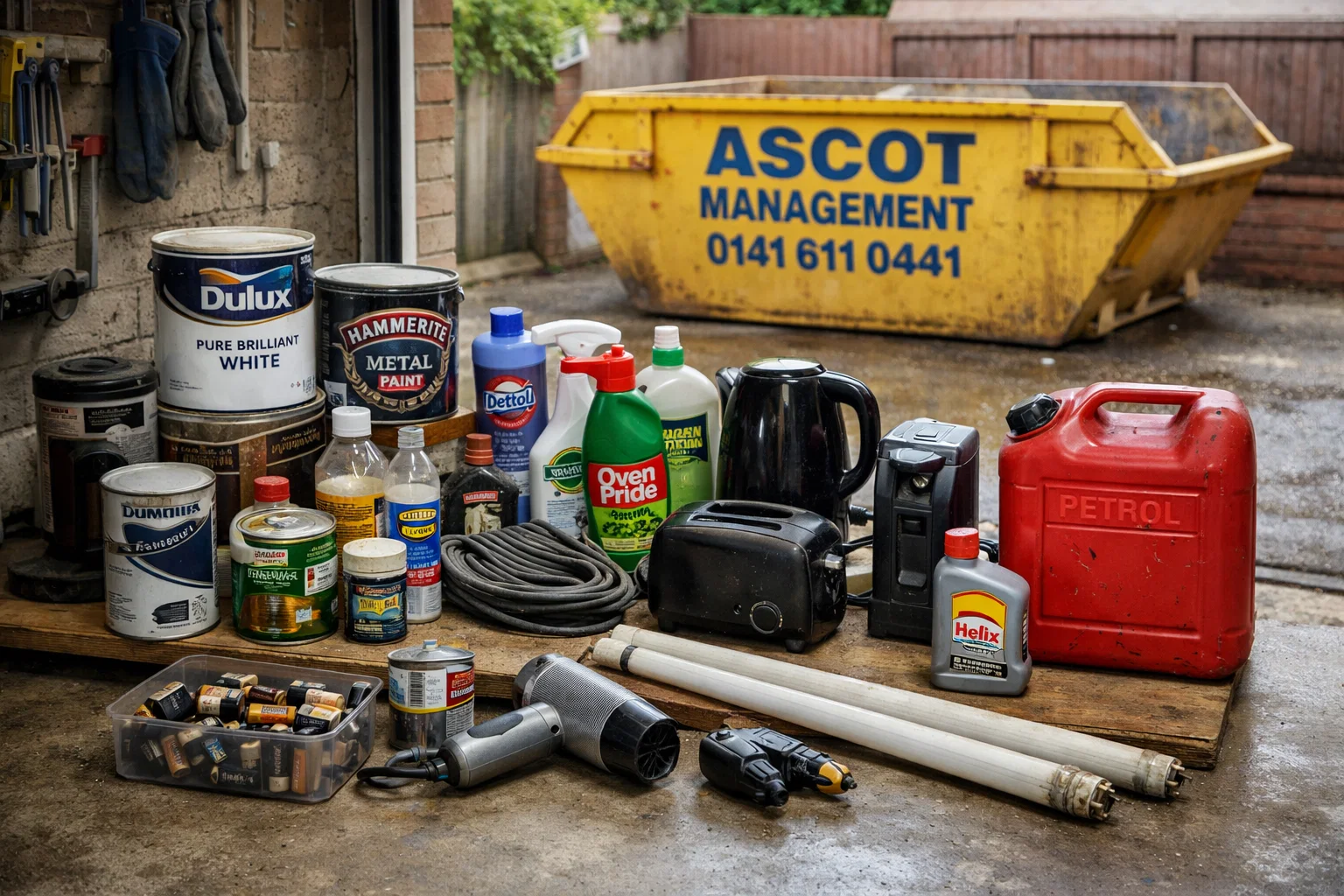
Everyday Items Considered Hazardous
Hazardous waste is far more common in homes, garages, sheds, and renovation projects than most people realise. Many everyday items are, in fact, hazardous. These include:
- Paint and paint thinners
- Cleaning chemicals and solvents
- Pesticides and garden chemicals
- Old electrical appliances
- Fluorescent tubes and light bulbs
- Batteries
- Plasterboard
- Asbestos
- Gas cylinders and fuel cans
- Engine oil and car fluids
People often try to throw these items into skips with other bulky items, not realising that they are hazardous. Stay alert: Look out for electrical components, chemical presence, and packaging labels.
WEEE Waste Electrical Items
Many householders don’t realise that electrical items do not belong in a skip. Anything with a plug, a battery, or a circuit board falls under the Waste Electrical and Electronic Equipment (WEEE) regulations.
These items contain components that must be safely removed before recycling. Fridges contain gases and oils. TVs and monitors contain hazardous materials. Even small appliances contain metals and plastics that need specialist processing.
What Glasgow businesses should do with WEEE waste:
You have a few options for disposing of WEEE waste.
- Take electrical items to a household waste recycling centre
- Use retailer take-back schemes when buying replacements
- Arrange a bulky uplift if transport is an issue
Electrical waste is recyclable through the hands of the correct people.
Paint, Solvents, and Chemicals
Half-used paint tins, white spirit, cleaning chemicals, weed killers, and solvents all contain hazardous chemicals, all dangerous in a landfill. They leak into soil and groundwater when crushed. Some are flammable. Others release harmful fumes, so you may not place them in skips or pour them down the drain.
Paint that has dried solid in a tin is an exception, as it is no longer hazardous. Once the paint on the tin has completely dried, you may place it in a skip.
Safe disposal routes for paint, solvents and chemicals in Glasgow include:
Here’s what to do with paint, solvents and chemicals:
- Keep materials sealed in the original containers
- Take them to a Household Waste Recycling Centre
- Never mix chemicals or pour them into sinks or outside drains
These regulations protect our water systems, landfill sites, and the people who process the waste.
Asbestos
Many older garages, sheds, roofing sheets, ceiling tiles, pipe lagging, and insulation boards contain asbestos. It was widely used in buildings for decades because it is durable and fire-resistant.
But asbestos is toxic and can cause serious respiratory harm. Once cut, crushed or broken, asbestos releases fibres which become airborne. When humans inhale these fibres, they can become seriously ill with diseases such as asbestosis and lung cancer. As a result, asbestos is among the most tightly controlled waste materials in the UK. Never place asbestos into a skip. If the waste disposal centre finds it, they will reject the entire load as contaminated hazardous waste. They cannot process the waste, and specialist disposal costs can be very high. You will pay the high cost of asbestos disposal services for the entire skip load.
How to safely dispose of asbestos
Do not handle asbestos yourself. If you break it, it will release the fibres, putting your family’s health at risk. Contact a licensed asbestos removal contractor and arrange specialist collection and disposal.
Many people only realise they have asbestos when they start the demolition works. If you suspect asbestos, stop immediately and seek professional guidance and support.
Gas Bottles, Fuel, and Pressurised Containers
Gas bottles, fuel cans, fire extinguishers, and large quantities of aerosols are explosion and fire risks. Truck and waste facilities often crush waste, raising the risk that items could ignite or explode.
Hazardous waste in this category includes:
- Calor gas bottles and LPG cylinders
- Petrol and diesel cans
- Fire extinguishers
- Bulk aerosols
Return these items to the suppliers or take them to facilities equipped to safely handle hazardous liquids and pressurised containers.
Tyres, Batteries, and Car Parts
Tyres, vehicle batteries (including lead-acid and lithium-ion batteries), and certain car parts are restricted because of the materials they contain. Environmental regulations prohibit tyres in landfills. Batteries contain acids and heavy metals. Many car parts contain oils, fluids, and components that need specialist recycling. Garages and vehicle service centres have dedicated disposal routes for these materials.
Skip companies refuse these goods because they cannot process them with general construction or household waste.
The correct disposal route to use for tyres, batteries and car parts
You should handle each of these items differently. Here’s what to do:
- Return batteries to garages or recycling centres
- Use tyre retailers for old tyre disposal
- Take car fluids and parts to approved recycling facilities
These materials are recyclable, but only through the right channels.
Plasterboard and Gypsum
Plasterboard looks harmless. It’s light, chalky, and used in most homes, so plasterboard waste is common on renovation sites. Plasterboard is a restricted waste product, so you can’t mix it with general waste.
Buried in landfills, plasterboard breaks down, releasing hydrogen sulphide gas. This gas is harmful to both people and the environment.
Homeowners often discard plasterboard during home renovations and building projects, not realising the special handling needs.
How to dispose of plasterboard
Inform your skip provider in advance about the plasterboard disposal. Keep plasterboard separate from other rubbish. Use a dedicated plasterboard skip, preferably with a cover. If you have small amounts of gypsum, take them to a recycling centre that accepts it.
Medical and Sanitary Waste
Medical and sanitary waste pose health and infection risks. For this reason, they require special disposal or controlled incineration. Medical waste includes needles and sharps, unused medicines, dressings and other clinical materials.
What to do with medical and sanitary waste
- Pharmacies often accept unused medicines.
- Local authorities can advise on sharps disposal.
- Care providers and medical services use dedicated waste collection services for clinical materials.
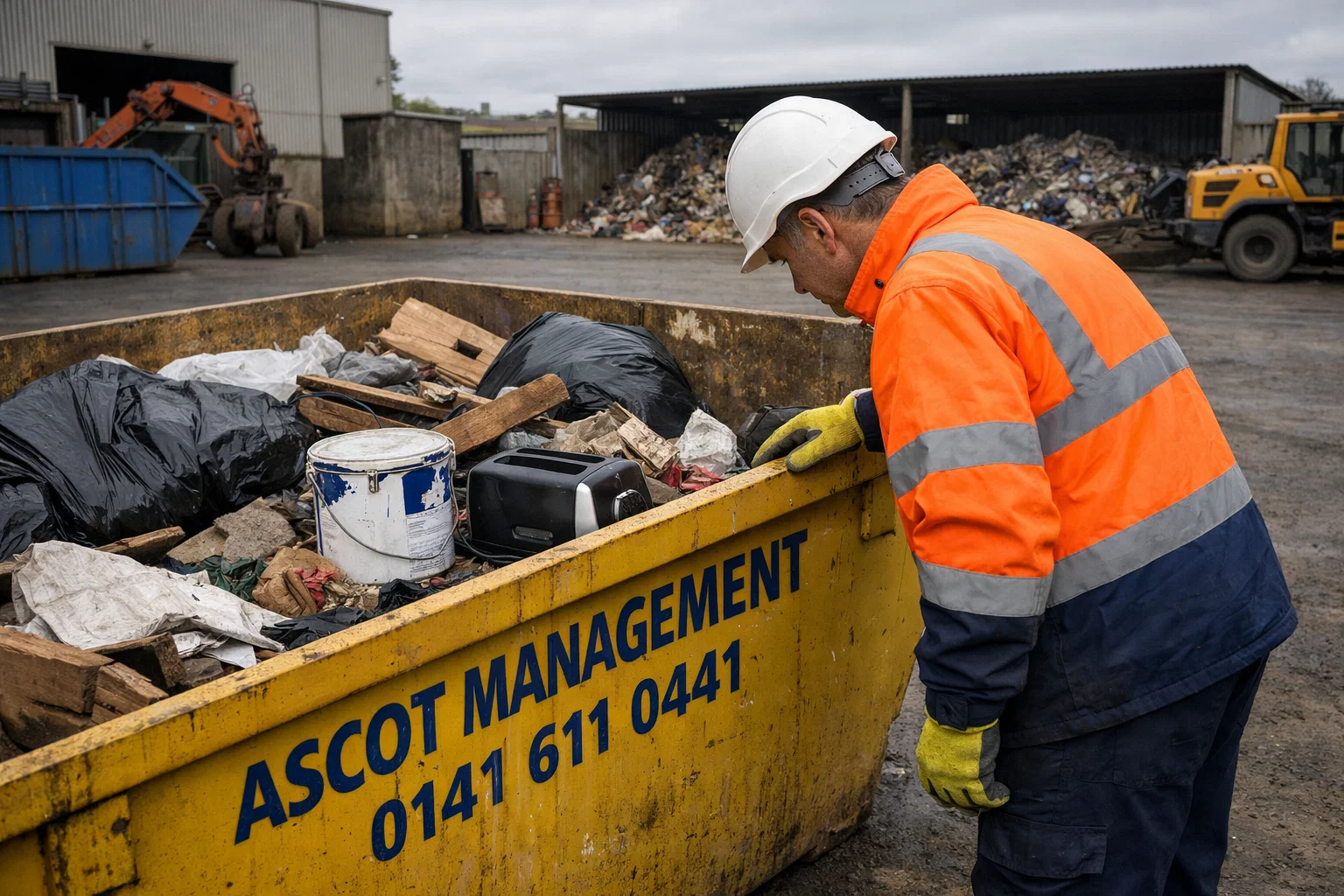
What Happens If You Put Hazardous Waste in a Skip?
UK law prohibits the loading of hazardous waste into a skip. The skip hire company does not allow it, and you could face serious consequences if you’re caught. If the collection team sees hazardous waste in the bin during collection, they may refuse to uplift it. You could also face substantial surcharges for contaminating the bin.
Hazardous waste, such as chemicals, solvents, and medical waste, can pollute the environment and pose health risks if mixed with general waste. You could face fines or prosecution for improperly disposing of hazardous waste under UK waste regulations. Licensed carriers must take such waste to approved facilities for disposal.
Inappropriate hazardous waste disposal is a serious legal offence under Scotland’s environmental law. Here’s what happens.
The skip company may refuse to uplift the skip
The driver who collects the skip will conduct a visual inspection. If they see items classed as hazardous waste, they will not take the skip. You will need to remove the items before the skip company returns to collect the skip.
You will bear the cost for another collection and for the labour to empty and sort the skip. If you don’t clear the offending items immediately, you may incur additional rental fees.
Contamination fees
If the hazardous waste is only discovered at the waste transfer station, the waste facility will charge the skip company contamination fees. The skip company will pass these on to you. These charges are often substantial. Asbestos contamination fees can run into the thousands. One of the biggest culprits here is older plasterboard, which may contain asbestos coatings.
SEPA investigations
As licensed waste carriers, skip companies must report any improperly discarded hazardous waste. These reports may lead the Scottish Environment Protection Agency (SEPA) to investigate. SEPA may impose fines and, in serious cases, they may prosecute offenders.
All skip waste becomes hazardous
If you contaminate your skip with hazardous material, the waste handlers may declare all the material in the skip hazardous. If this happens, the entire load must receive specialist treatment, which will cost you more than you bargained for.
You may void your skip hire agreement
Most skip hire terms contain a list of prohibited materials. If you breach the terms and conditions of your contract, the company is not liable for charges incurred. Additionally, the waste removal company may refuse to service your requirements in the future.
What if you’re unsure about the safety of your waste
Direct any queries about waste categories to the waste removal company. A quick phone call to your skip provider can save you from additional costs, collection refusals and legal issues. It’s cheaper and easier to adhere to the hazardous waste rules than to try to fix it later.
The safe way to handle hazardous household waste
Tell the skip rental company about your hazardous waste requirements before they deliver the skip. Whatever the scale of your project, the team can recommend the right size, whether that is a 4 yard skip, 8 yard skip, 12 yard skip, 14 yard skip or 16 yard skip.
They will either arrange a separate collection or provide the appropriate skip, if you have:
- Paint
- Chemicals
- Asbestos
- Plasterboard
- Electrical appliances
- Gas cylinders
- Oils or fuels
The skip company can also provide information on the specialist disposal routes for the various types of waste.
Safe Alternatives for Hazardous Waste Disposal Services
Knowing what can’t go in a skip is only half the story. The important part is knowing what to do with it instead. The good news is that Glasgow has safe, affordable routes for hazardous household and commercial waste.
- Glasgow City Council Services: The council provides residents with specialised hazardous disposal centres. The council-run recycling centres will take items such as paint, chemicals, and batteries.
- Licensed Hazardous Waste Contractors: Licensed carriers collect, transport and deliver hazardous waste to approved treatment sites. They also provide the consignment notes required by UK law.
- Specialist Skip Hire Services: A few skip hire companies offer hazardous waste services. They can provide customers with drums or sealed containers for disposing of items such as asbestos and chemical waste.
Domestic and Commercial Waste Disposal Services You Can Trust
Hazardous waste is not rare. It turns up in lofts, garages, sheds, kitchens, offices, and building sites every day of the week. The problem is that most people don’t recognise it until it’s already mixed with general waste and waiting for collection in a skip.
By then, the waste can cause delays, extra costs, refused collections, and even legal troubles you could do without.
Knowing what can’t go in a skip is just as important as knowing what can. Paint, chemicals, electrical items, plasterboard, asbestos, gas bottles, tyres, batteries, and medical waste all need separate handling. These rules are there to protect waste workers, the environment, and you from the consequences of improper disposal. If you’re planning a clear-out, renovation, or commercial project and you’re unsure about any items, the safest and cheapest step is to ask before you load.
Ascot Management Services provides reliable skip hire in Glasgow, Hamilton and Motherwell, along with waste management and recycling services. Our professional staff has the experience and training to recommend the best disposal route for hazardous waste. You can expect excellent service at a reasonable price for all your waste removal needs.
Speak to the team before you book your skip, and make sure your waste is handled correctly from the start.