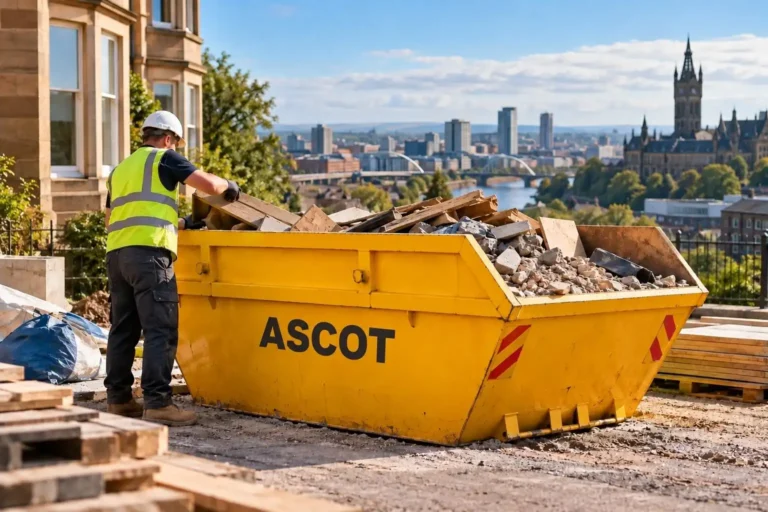
Construction waste is one of those things that creeps up on you. A job starts clean, everything has its place, then before long there are stacks of rubble, bits of timber, empty packaging and materials you are not using anymore. It does not take much for a site to get messy, especially when things are moving quickly.
Some teams stay on top of it. Others leave it until it becomes a problem. That is usually when costs start creeping in as well. Extra collections, wasted space, delays on site. It all adds up. Construction waste disposal is not just about clearing rubbish at the end of a job. It is something that runs through the whole project, whether people realise it or not.
There is also the compliance side of things. Rules around waste management have tightened over time, and local authorities are paying closer attention. If waste is not handled properly, it can lead to fines or delays. Most businesses just want a simple way to deal with it, keep the site moving and avoid unnecessary hassle.
What Is Construction Waste and Why It Matters
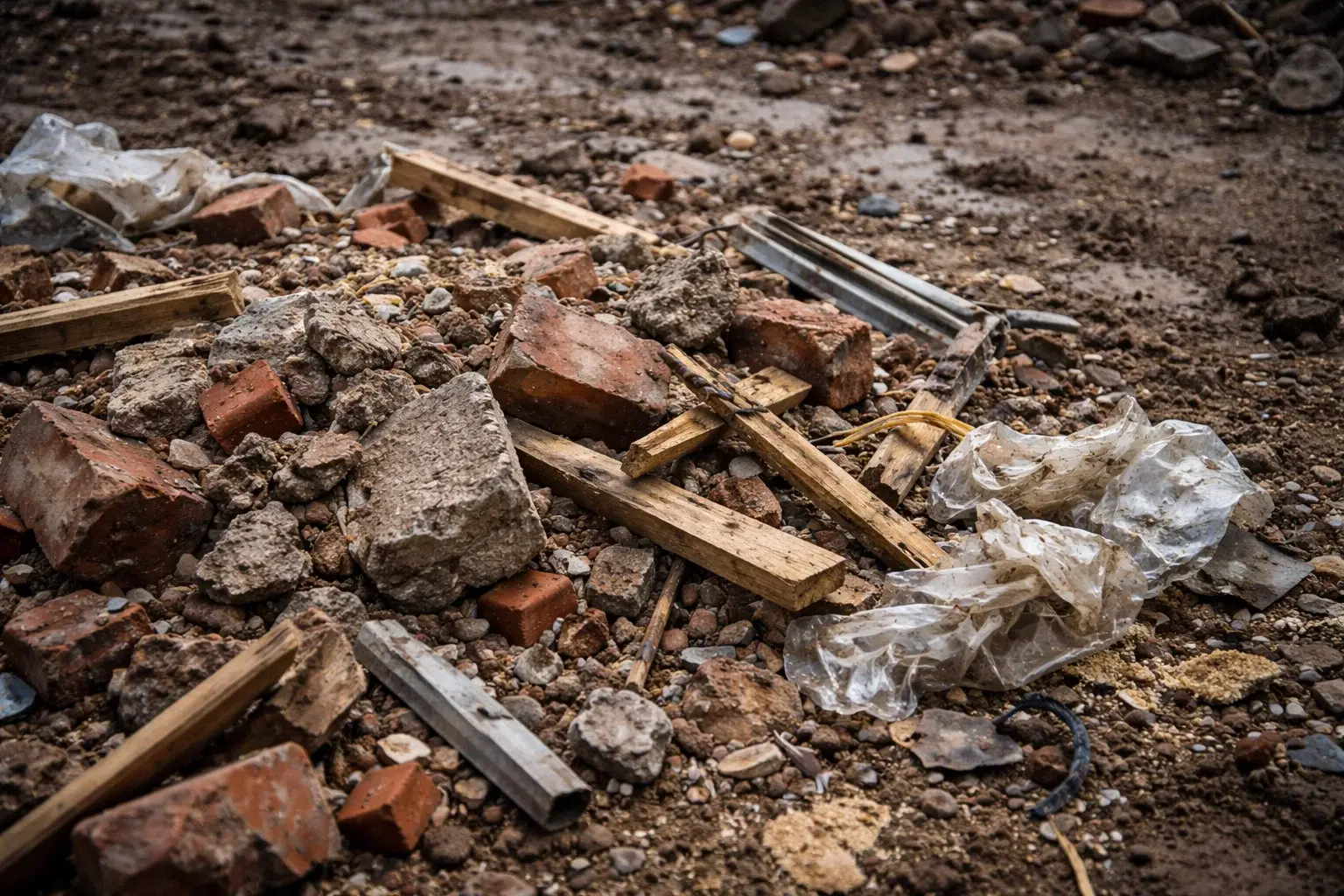
Construction waste is not always obvious at first. It is easy to think of it as just rubble or broken bricks, but it usually goes further than that. On most construction sites, you will see bits of timber, packaging, leftover materials and scrap metal building up over time. It tends to happen in the background while the actual building work carries on.
Some of that waste is fairly straightforward to deal with. Other parts are not. Materials like hazardous waste need more careful handling, and that is where people can get caught out. If it is not separated or removed properly, it can affect safety on site and push disposal costs up without much warning. There is also the paperwork side, with waste transfer notes and licensed waste carriers, which often gets overlooked until it becomes an issue.
Common Types of Construction Waste on Site
Most construction sites end up dealing with the same kinds of waste, even if the jobs themselves are completely different. Concrete, bricks and rubble are usually the obvious ones, especially during demolition or groundwork. Then there is timber, metal and plasterboard, along with packaging that comes with building materials. It all builds up at different stages, which is why it can feel constant.
Some waste is easier to handle than others. Inert waste like concrete or soil can often be separated and reused, while materials such as plastic, metal and scrap can go through recycling if they are kept clean. The problem is when everything gets mixed together. That is when waste removal becomes slower, more expensive and harder to manage properly across the site.
Construction Waste Removal: How It Works on Site
On most construction sites, waste removal is not something people think about straight away. It usually starts off manageable, with bits of waste here and there, then gradually builds up as the job moves on. Before long, you are dealing with piles of materials that need shifting just to keep the site usable.
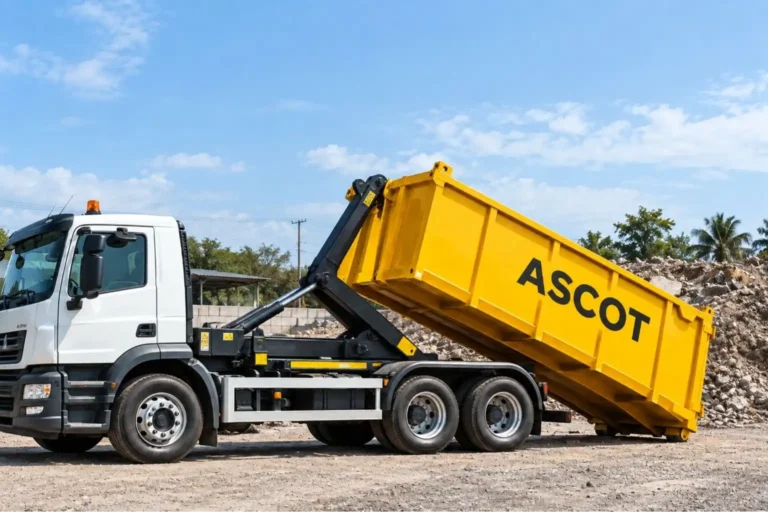
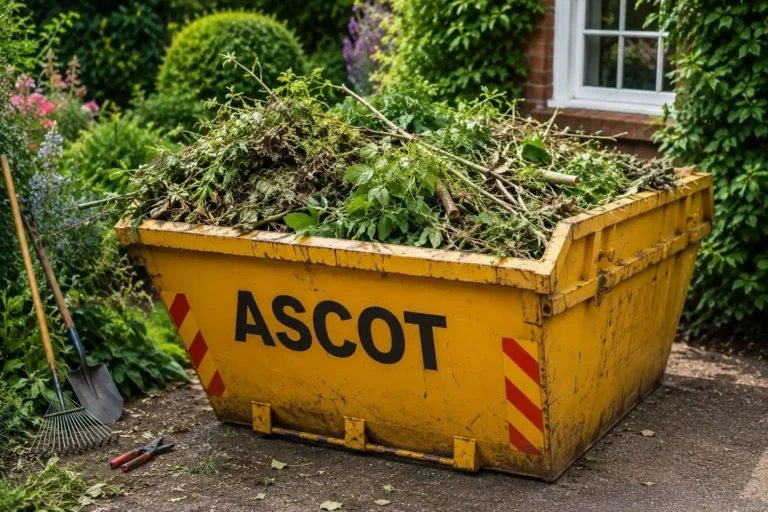
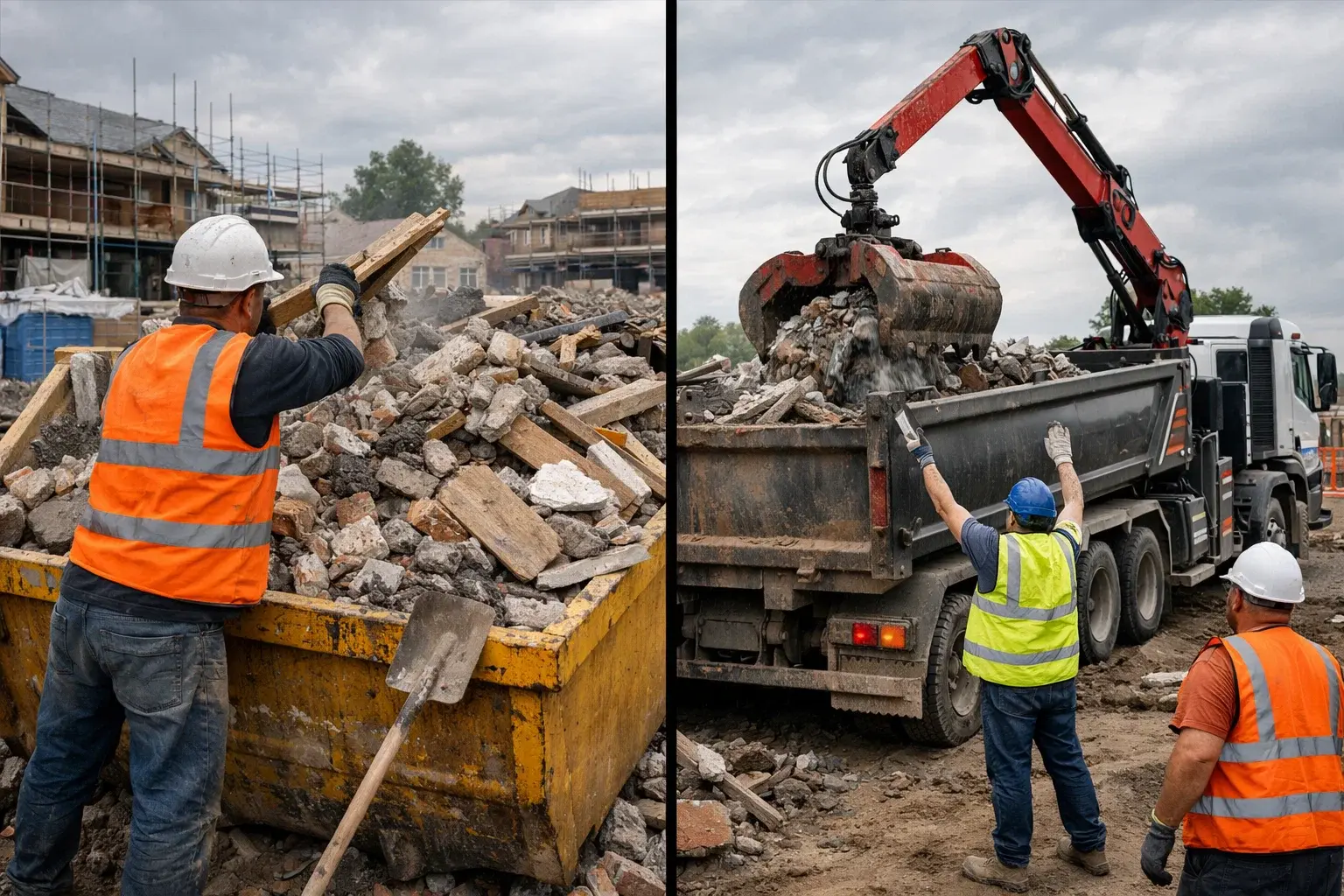
Different jobs handle it in different ways. Some will bring in skip hire early on, others wait until things start getting out of hand. Sizes vary depending on the job, from a 4-yard skip for smaller clearances up to an 8-yard skip for general mixed waste, with 12-yard, 14-yard and 16-yard options available when there is more to shift. You might see skip bags used on tighter sites, or a grab lorry brought in to clear heavier waste like concrete and rubble. It often depends on space, access and how quickly waste is building up, rather than one fixed approach.
Building Waste Disposal vs Collection: What’s the Difference?
It is easy to mix up disposal and collection, especially on a busy site where everything just needs clearing. Most people just want the waste gone, so it all gets grouped together. In reality, they are not quite the same thing, even though they get used that way day to day.
Collection is simply getting the waste off site. That could be a skip, a waste carrier turning up, or a quick clearance when things start piling up. Disposal is what happens after that, once the waste has gone. If it is not handled properly further down the line, it can come back as a problem, whether that is higher costs or issues with how the waste was managed.
How to Reduce Construction Waste Disposal Costs
Costs usually creep up when waste is left to build without much thought. It is not always obvious at first. A few extra collections here, a larger skip there, and suddenly the spend looks very different from what was planned at the start of the project.
Small changes tend to make the biggest difference. Keeping waste separated, timing collections properly and not letting materials pile up too much can all help keep things under control. It also helps to know roughly how much waste is being generated as the job moves along, rather than guessing. That way, disposal costs stay predictable instead of becoming something that needs fixing later.
Choosing the Right Waste Removal Partner
Finding the right company is not always as straightforward as it sounds. A lot of waste removal services offer similar things on paper, but they do not always work the same way once you are on site. Some are quick in and out, others are a bit more involved, which can help when a job starts getting busy.
It usually comes down to reliability. If a waste carrier turns up when expected and just gets on with it, it makes life easier for everyone. Using a licensed waste disposal company also means the paperwork is handled properly, including waste transfer notes, so there is less to think about day to day. That alone can save time and avoid issues later on. It also helps to work with a company that knows the area. For sites in Glasgow, Hamilton and Motherwell, a local skip hire company usually means quicker turnaround and better knowledge of site access and conditions.